Icarus
The platform handles high-complexity regulatory and financial data. My role was to transform dense, regulation-heavy workflows into a clear, decision-support experience.
The challenge
Tax systems are inherently Data-heavy, legally constrained, terminology-driven, and used by both citizens and internal officers. Most legacy systems in this space suffer from poor hierarchy, overloaded screens, unclear payment status and minimal guidance
The goal was to redesign ICARUS into a modern, structured, decision-support interface without oversimplifying the regulatory complexity.
The objective was to introduce structural clarity and system-level consistency without restricting commercial flexibility or promotional agility

What I focused on
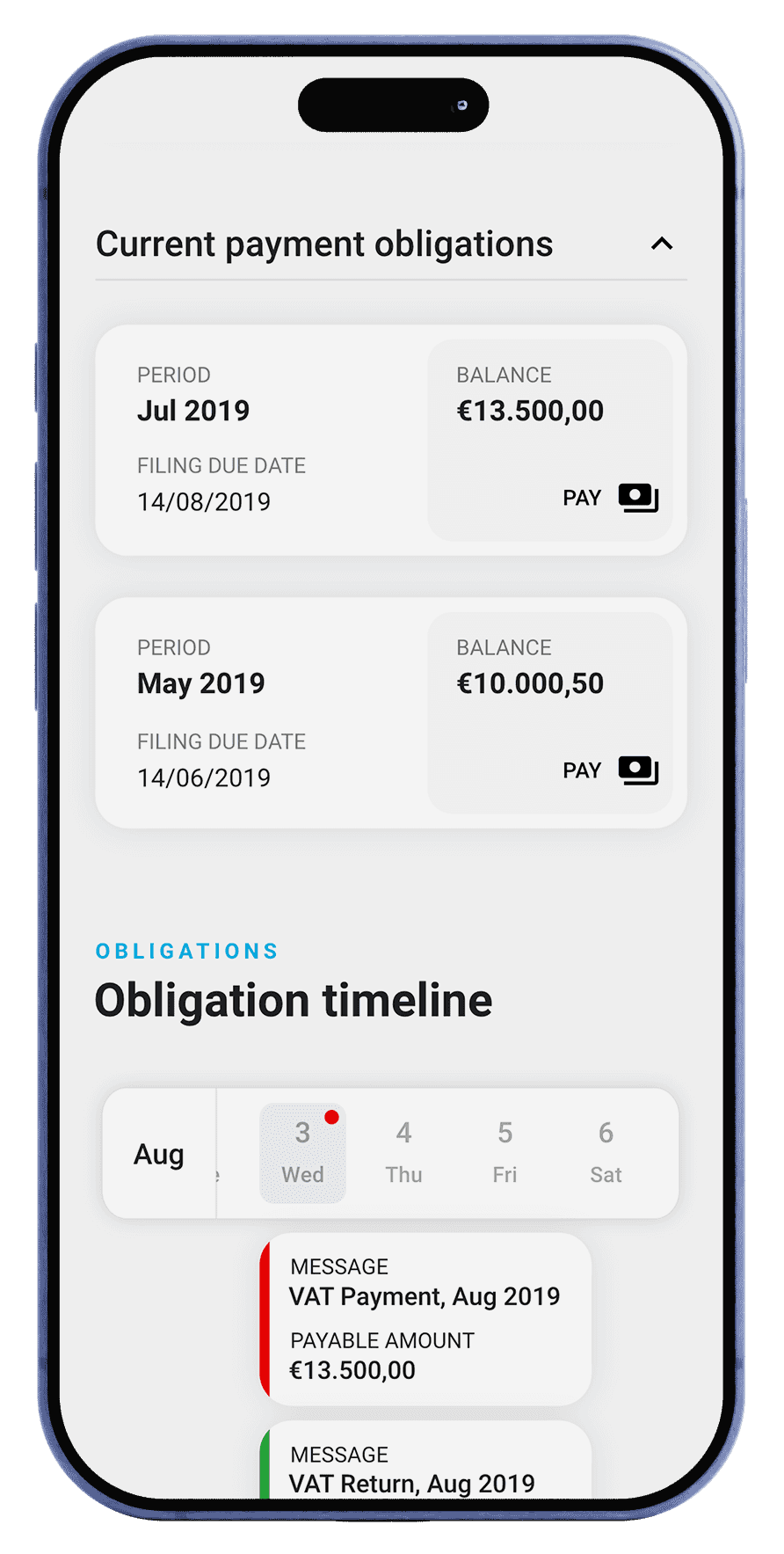
Payment and clarity
Users must instantly understand: • What’s due • What’s overdue • How much they owe • What action to take I introduced strong monetary hierarchy, clear debt labels, status color coding, and predictable action placement. Result: Faster decisions, fewer errors, reduced friction.
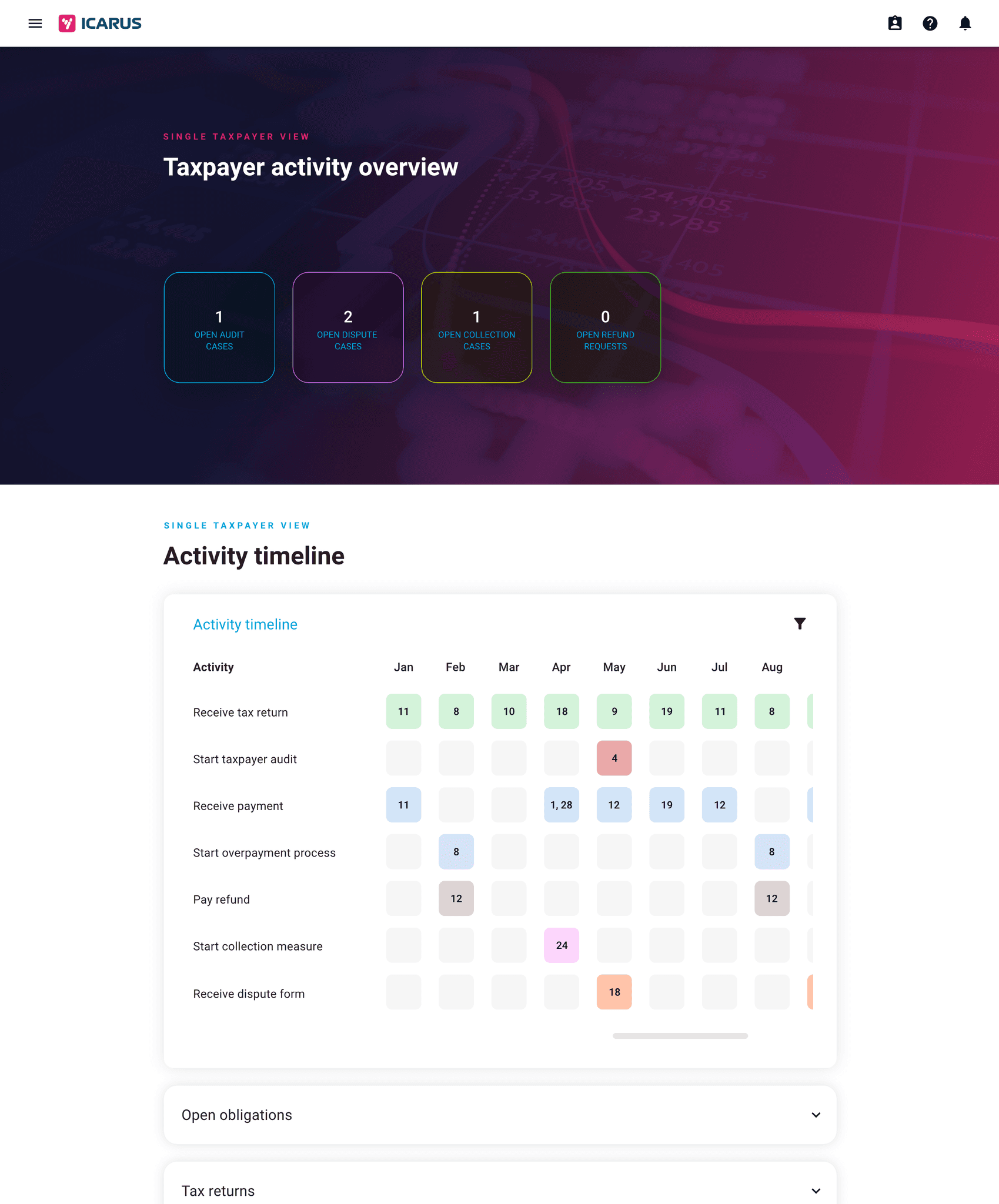
Time-based understanding
Tax obligations are temporal. I replaced static tables with a timeline-based structure that visualizes filings, payments, and events chronologically. Result: Better context. Less confusion.
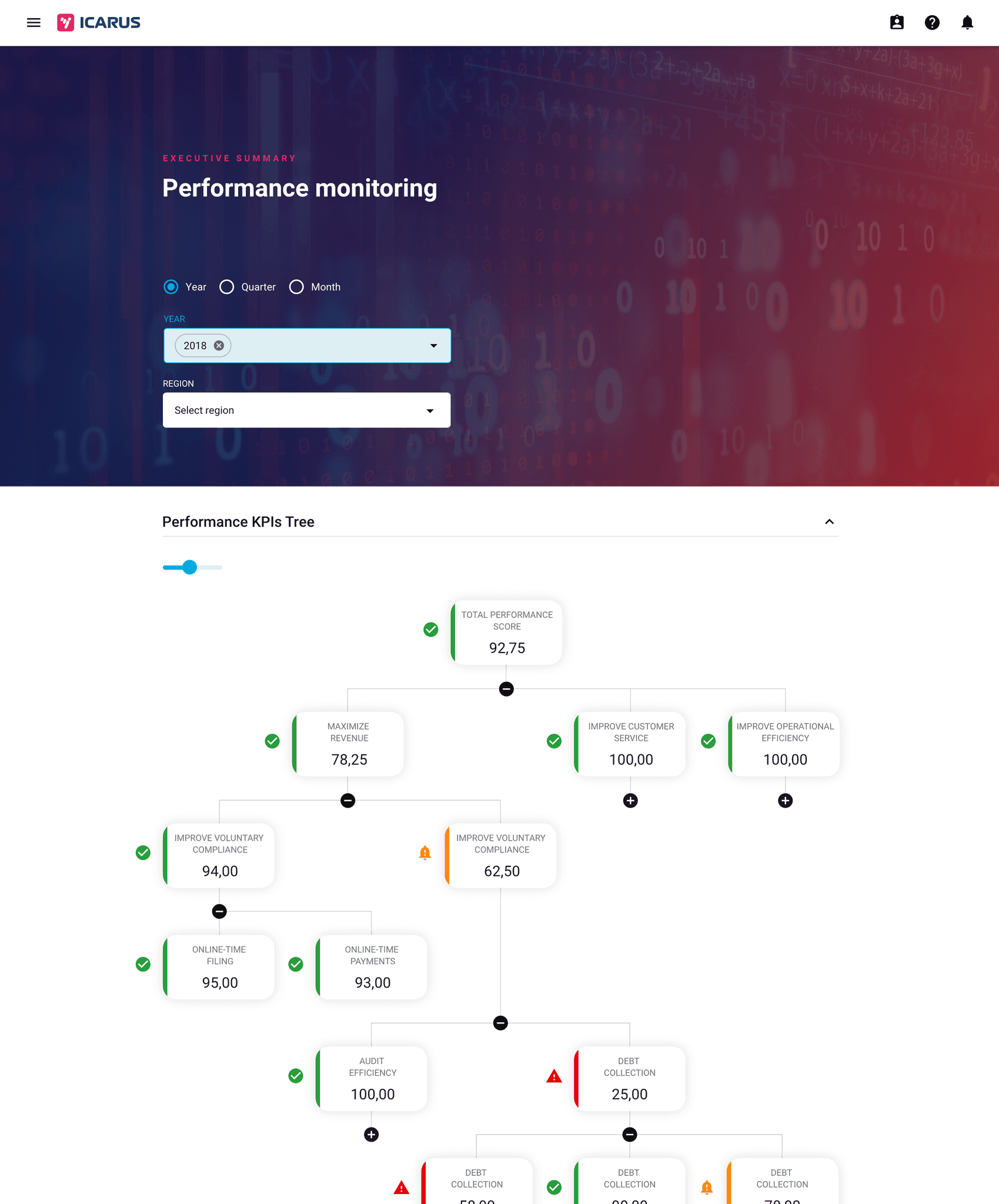
Risk and compliance visibility
Risk scoring was fragmented and hard to interpret. I structured it into clear visual layers: • Trend history • Event-based alerts • Debt segmentation Result: Strategic insights separated from operational actions.
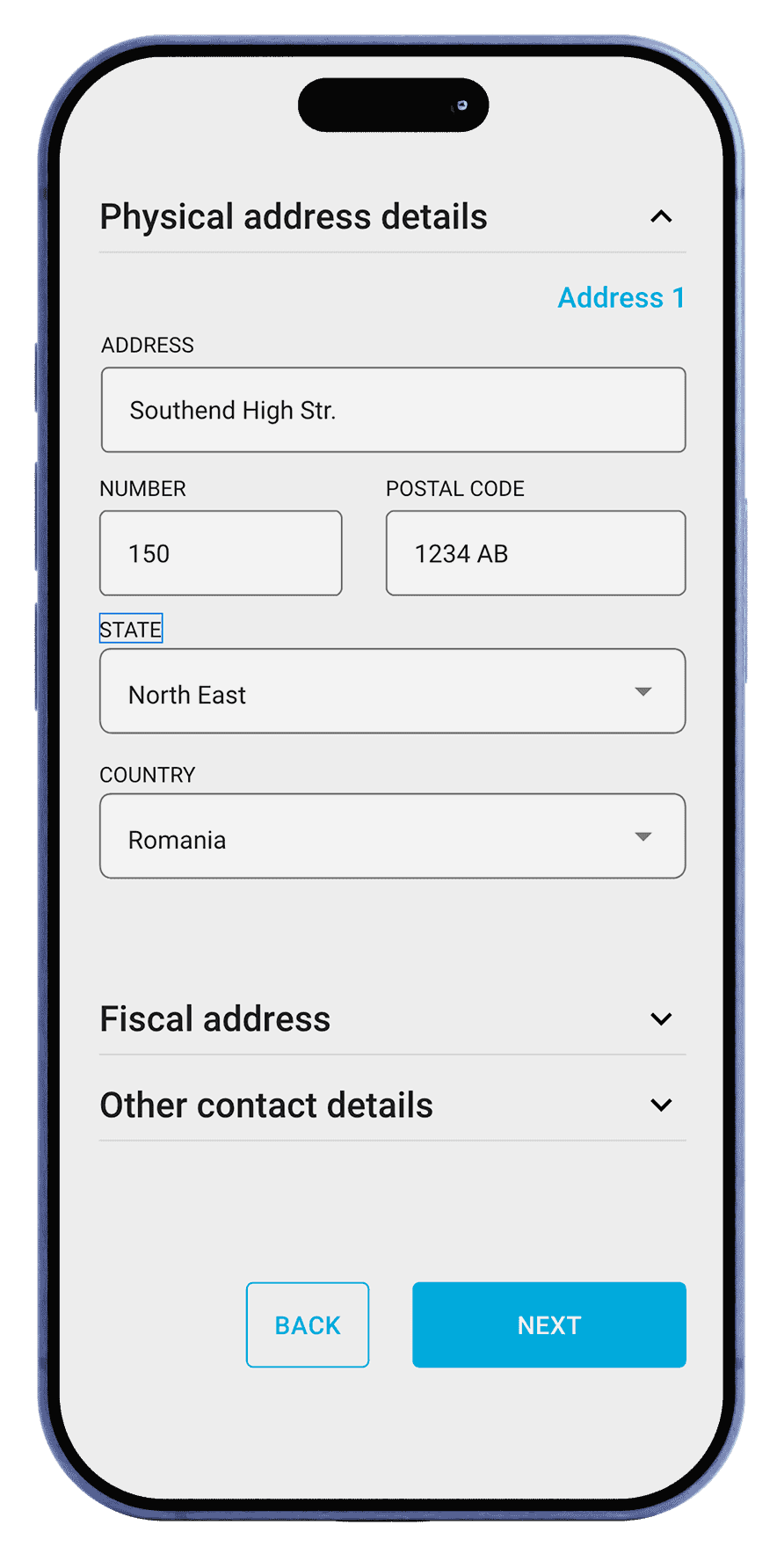
Stuctured forms
Registration and address flows were redesigned with: • Collapsible sections • Logical grouping • Clear hierarchy Result: Reduced cognitive overload in long forms.
Design principles applied
• Progressive disclosure • Strong hierarchy • Card-based modular layout • Consistent interaction patterns • Accessibility-first thinking • Clear separation of “Action” vs “Insight”
Outcome
• Improved clarity in high-risk financial flows • Reduced visual density • Scalable component system • Better decision support for both citizens and officers
What I learned
Designing for taxation isn’t about aesthetics — it’s about structuring complexity, designing for consequences, supporting accountability, and reducing cognitive load in high-risk environments.
This project shows how strong UX principles can modernize even rigid administrative systems.
ennya@otenet.gr
Ennya
Made with ❤︎ by Stamatis Tsirdimos
© 2025. Stamatis Tsirdimos